
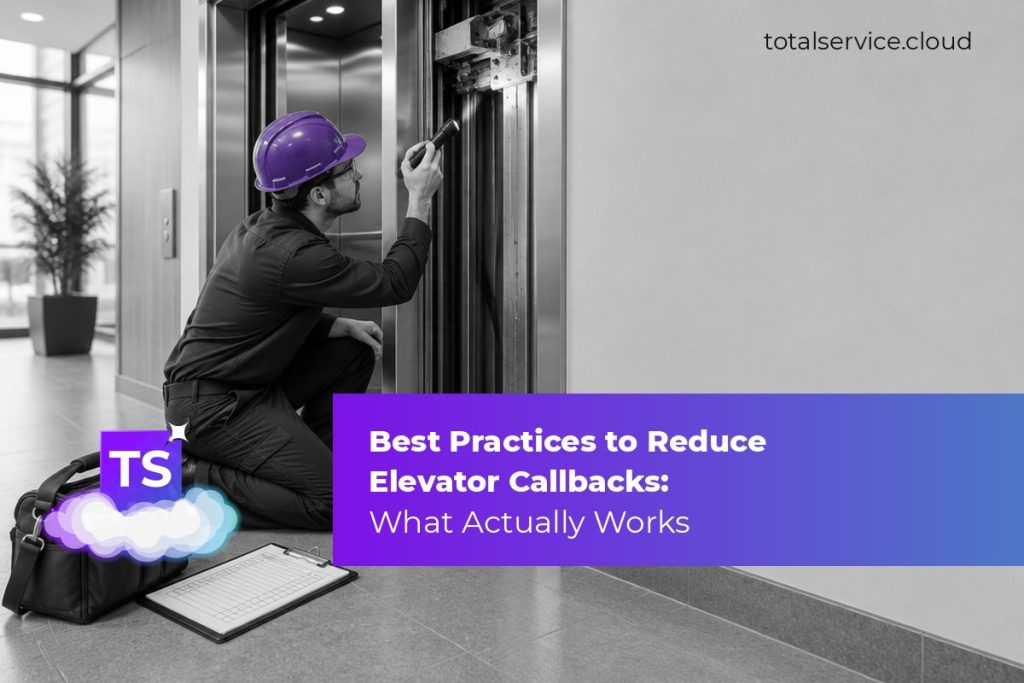
Reducing elevator callbacks is not a mystery. The practices that work are well understood across the industry. What separates the service companies with the lowest callback rates from everyone else is not knowing those practices but carrying them out, every visit, on every route. Here is a practical look at the practices that move the number and why each one works.
Monthly preventive maintenance comes first
Every conversation about callback reduction starts here. In Elevator World, consultant John W. Koshak describes how major companies moved away from monthly visits, in some cases to as few as one visit per year, and writes that “we then see increased callbacks, which are a direct performance indicator of the efficacy of preventive maintenance.”
He is just as direct about remote monitoring: “Remote elevator monitoring is not a substitute for preventive maintenance: It cannot clean, lubricate or prevent any issues.” It cannot prevent rust, debris and dirt, spot water from a leaking roof, blow carbon dust out of controllers or change controller filters. Those tasks need a mechanic on site who can listen to, look at and check the equipment.
Monthly maintenance is also a compliance and liability matter. ASME A17.1, the primary elevator safety code in North America, sets the baseline for maintenance requirements. A mechanic who visits monthly has the chance to fix small issues before they turn into service-affecting failures. One who visits quarterly or less does not have that window, and the result is more unplanned callbacks and a higher risk of incidents that cost far more than a maintenance visit.
Right-size your route structure
Koshak describes 70 to 90 units as the typical load for a route mechanic, and notes that some major company mechanics now report up to 350 units on their routes. At those volumes, thorough preventive maintenance on every unit each month is close to impossible. With more units, more callbacks and more tasks scheduled than can be done in a month, he writes, mechanics end up doing little housekeeping, rustproofing or lubrication.
A route sized for complete monthly work leaves room for preventive tasks, callback response and the documentation that feeds pattern analysis. If your routes have grown past that point, callback reduction efforts are fighting a structural problem that tactics alone cannot solve.
Track root causes, not just totals
Door equipment deserves close attention on every visit. CMMS vendor osapiens, citing facility operations research it does not name, puts door operator failures at 42% of elevator service calls. If door operators, door sensors and alignment are not getting detailed attention on every visit, you may be skipping the check most likely to prevent your next callback.
Capturing a root cause on every callback record turns your data from a headcount into a diagnostic tool. When you know whether callbacks come from door issues, leveling problems, controller faults or misuse, you can aim corrective action precisely. You can also see whether the same failure keeps coming back on the same unit, which points to a deferred repair or a component near the end of its useful life.
A standardized inspection checklist matters for the same reason: it makes sure critical components get consistent attention no matter which mechanic performs the visit.
What should a thorough preventive visit cover?
A monthly preventive maintenance visit that actually prevents callbacks should include:
- Door operator inspection and alignment check, including clutch and vane adjustment
- Lubrication of guide rails, door rollers and other moving components
- Inspection and cleaning of the machine room, controller enclosure and pit
- A leveling accuracy check against the tolerance your code and contract require
- Testing of emergency communication systems and safety devices
- Inspection for water intrusion, rust and debris
- Review of controller logs for fault codes that have not yet caused a service disruption
The items most often skipped when time is short are cleaning, lubrication and controller log review. Those skipped tasks are also the most direct path to future callbacks.
Use callback history to plan ahead
Past callbacks are a reliable guide to future callback demand on a route. Koshak writes that “historically, past callbacks are a good estimation of how many hours can be expected for callbacks looking forward,” and recalls that an 80-unit traction route would generally have about 200 callbacks a year, each taking about 2 hours. Planning around that reality, rather than treating every callback as a surprise, gives dispatchers a realistic picture of the labor load on each route and keeps good mechanics from missing scheduled maintenance.
The same thinking applies to component replacement. When callback history shows repeated failures on one component type, replacing it before it fails again is a one-time cost that removes a recurring one. That conversation with the building owner is easier when you have the failure data to back it up.
Document every visit
A complete record of what was inspected, adjusted, lubricated or repaired on each visit gives you the baseline you need to see when a unit’s condition is changing. It also protects you when a building owner asks whether their contracted maintenance is being performed.
That means mechanics record their work as they go, not at the end of a shift from memory. A work order logged in the field is more complete and accurate than one rebuilt later. This is where field service software becomes a direct callback reduction tool: when mechanics can see a unit’s service history before they start a visit, they know what to look for and what was deferred last time.
Fix small issues before they become a call
Most elevator callbacks have a warning sign that a thorough mechanic can catch on a scheduled visit. A door slightly out of alignment will eventually cause an entrapment. A leveling deviation that is within tolerance today can drift out of tolerance with continued use. A controller fault code that has not yet affected operation may eventually cause a service disruption.
Dealing with those warning signs during scheduled visits, instead of waiting for them to turn into callbacks, is the most direct path to fewer callbacks. It takes time, which takes manageable route sizes. It takes attention to detail, which takes standardized checklists. And it takes visibility into each unit’s history, which takes reliable records. None of these are complicated. All of them take consistent execution.
Frequently asked questions
How often should elevators get preventive maintenance to keep callbacks down?
Monthly. A consultant writing in Elevator World ties reduced visit frequency directly to rising callbacks and argues that remote monitoring cannot replace monthly tasks such as cleaning, lubrication and rust prevention.
How many units should an elevator route mechanic handle?
The same Elevator World article describes 70 to 90 units as the typical route load, and notes that some major company mechanics now report up to 350 units, a load that leaves little time for preventive work.
Can remote monitoring replace preventive maintenance visits?
No. Remote monitoring can flag malfunctions, but it cannot clean, lubricate or prevent rust and debris. It works best as a supplement to monthly visits.
Why track the root cause of every callback?
Root causes show whether callbacks come from doors, leveling, controllers or misuse, and whether the same failure keeps returning on one unit. That tells you where to aim maintenance and when a repair or replacement proposal makes sense.
Ready to reduce callbacks across your portfolio?
TS Cloud is built for independent elevator contractors, and for HVAC and specialty contractors. It creates work orders automatically, lets you tag every callback by type and cause and report on it by unit, route and technician, and shows mechanics a unit’s service history in the mobile app before a visit. Schedule a demo of TS Cloud.